


 102
102 10
10
 1hr
1hr
Published today, the latest issue of Research Library Issues, no. 298, looks at the critical role and participation of libraries and librarians in supporting the #datascience revolution at research universities.
Thank you for your interest in TOME (Toward an Open Monograph Ecosystem). After a successful run supporting the open access publication of humanities and social sciences monographs, the TOME initiative is no longer active.
All books published through TOME remain freely available. You can browse the full collection at:
Authors are the heart and soul of TOME. Here authors will find answers to many of their questions about TOME.
Learn MoreLibraries are critical to the future of scholarly book publishing. Find out more about the role that librarians play in the TOME initiative.
Learn MoreTOME supports the work of university presses by providing grants for scholarly monographs that are deserving of publication but increasingly difficult to publish due to market-based concerns.
Learn MoreTOME makes the work of humanities and social science faculty more widely available both inside and outside the academy, which advances the core mission of colleges and universities to create and transmit new knowledge for public benefit.
Learn MoreTOME’s mission is twofold: 1) to harness the potential of digital publishing technologies to increase access to book-length research in the humanities and social sciences and 2) to ensure the long-term economic viability of the scholarly publishing system.
To accomplish our mission we believe it is essential to change the way monograph publishing is funded. The reality is that university presses can no longer cover the costs of publishing specialized monographs through sales alone. Likewise, it is unreasonable to expect humanities and social sciences fields to adopt a STEM-style author-pays system. For these reasons, we believe that the only rational solution to the scholarly monograph dilemma is a system of institutionally funded faculty book subsidies that retains the same commitment to editorial excellence while guaranteeing global access through open access editions.
Of course, such a solution cannot be formulated and implemented overnight, which is why we seek partners and collaborators committed to fundamental change. TOME is eager to work with other open monograph initiatives that share the same vision of bringing together scholars, universities, libraries, and presses in pursuit of a common goal—a sustainable open monograph ecosystem. In short, TOME is a movement not a club.
Here you will find just a few of the latest monographs published with TOME funding.


TOME is part of a growing movement to open up scholarly research to the world. As such we support the work of other initiatives and, wherever possible, hope to collaborate with them.

Luminos is University of California Press’s open access publishing program for monographs.
Visit Website
Lever Press is a publisher of pathbreaking scholarship supported by a consortium of liberal arts institutions.
Visit Website
The Sustainable History Monograph Pilot (SHMP) is a Mellon-funded initiative to publish open digital editions of high-quality books from university presses in the field of history.
Visit WebsiteThe first five recipients of a TOME monograph subvention grant have been selected to receive funding provided by the Johns Hopkins University Office of the Provost to support an open-access (OA) digital publication of a book they have written. The 2020–22 TOME Monograph Subvention Grant recipients are:
Learn morePeter Potter, ARL visiting program officer for TOME and director of publishing at Virginia Tech Publishing, and Sara Grimme, senior director of operations at Digital Science, consider the following question on the Digital Science Blog: What comes next for open access monographs as we cautiously start to envision life beyond COVID-19?
Learn moreThe 2021 TOME Annual Meeting will take place virtually on October 28, 2021. TOME (Toward an Open Monograph Ecosystem) is an initiative to advance the wide dissemination of scholarship by humanities and humanistic social sciences faculty members through open editions of peer-reviewed and professionally edited monographs. Event Details Date: Thursday, October 28, 2021 Time: 1:00 p.m.–3:00 p.m. eastern […]
LEARN MORE 12h
12h
Published today, the latest issue of Research Library Issues, no. 298, looks at the critical role and participation of libraries and librarians in supporting the #datascience revolution at research universities.
 12h
12h
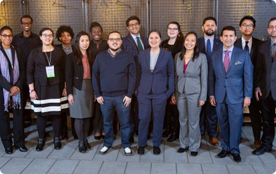
Congrats to the 18 new ARL Kaleidoscope Diversity Scholars for 2019-2021! Many thanks to ARL member libraries for funding this program for MLIS students. https://www.arl.org/news/arl-kaleidoscope-diversity-scholars-selected-for-2019-2021/ … #diversity #inclusion
 12h
12h
"Copyright law provides IHEs with broad, clear authority to create accessible copies of in-copyright works ... converting them into a format that makes it possible for users with disabilities to acquire the same information..." @ARLnews & @UVaLibrary

 1hr
1hr
Published today, the latest issue of Research Library Issues, no. 298, looks at the critical role and participation of libraries and librarians in supporting the #datascience revolution at research universities.